
'If chutzpah nationalists brought the Babri Masjid down, chutzpah secularists did precious little to stop it from being torn down.' 'If chutzpah nationalists ensured carnage in Gujarat, chutzpah secularists allowed Muzaffarnagar to become their next hunting ground.' 'Chutzpah secularists readily banned SIMI, but dragged their feet when it came to banning the Bajrang Dal.'

How to deal with a country that has made export of terror a reason to make the world notice and fund it? Rediff.com contributor Sanjeev Nayyar offers a few suggestions
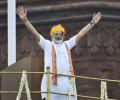
Following is the full text of Prime Minister Narendra Modi's address from the ramparts of the Red Fort on the 73rd Independence Day.
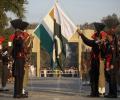
He was replying to a volley of questions about the outcome of Monday's brigade commander's flag meeting in Poonch.
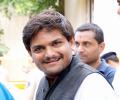
'If Haider petitions the court and the government for legitimate rights it is called minority appeasement, but when Hardik orchestrates violence he is lionised, romanticised and given huge media space that ends up both legitimising and oxygenating his movement, no matter how contrary it is to the Rule of Law,' argues Shehzad Poonawalla.

'A collapsing Pakistan may well unleash its nuclear weapons as the last throw of the dice. With a nuclear arsenal of over 50 bombs, even a regional nuclear exchange can devastate the world.'

'China's growing nexus with Pakistan and the two countries' unresolved territorial disputes with India continue to pose a formidable national security threat to India,' says Brigadier Gurmeet Kanwal (retd).

'I served the Indian Army and I am an ex-serviceman.' 'I look at this as a battle I am fighting after I left the army.' 'I will not leave till I get her back as my daughter Akhila, and I believe it will happen one day.'

Six Kashmiri Muslim students belonging to Sarhad, an organisation which brings semi-orphans from strife-torn regions to live and study at their school and college in Pune, share their hopes for their state and their experiences outside it. Jyoti Punwani reports.

The increase in violence along the Line of Control in the last few weeks indicates that despite the olive branch offered by Pakistan Prime Minister Nawaz Sharif, hard-line elements in Islamabad are in no mood to become friendly with India.
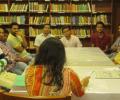
The Zakat Foundation of India runs welfare initiatives for the destitute and helps with the education of poor students. Upasna Pandey/ Rediff.com discover the origins of this organisation

Sanjeev Nayyar suggests 16 measures by which we can tackle our unrelenting and untrustworthy neighbour.

The Jamaat-ud-Dawa not only collected funds for charity and diverted it to the Lashkar-e-Tayiba, but also helped the outfit legitimise money collected through extortion, counterfeiting, smuggling and animal skin trade. Vicky Nanjappa/Rediff.com reports

'If you put colour-coded internal security maps of India in May 2014 and now, the picture won't be flattering to Modi.' 'Failures on internal security are now piling up and can break Modi's momentum,' says Shekhar Gupta.

'E Ahamed will be sorely missed as a decent and wise man who made the best use of his political career and personal abilities for the good of the nation,' remembers Ambassador T P Sreenivasan.

Anupam Kher on why he thinks the prime minister is a genuine person.
'Modi deliberately chose such unhinged people because they said what he wanted to, but couldn't,' says Aakar Patel.
'The surgical strikes were not meant to deter or stop infiltration.' 'It was meant to create a kind of uncertainty in the minds of Pakistani military commanders.' 'By using hard power we've created an option which was not there earlier.'
'Over the last year, Bajwa has created the environment to support bold moves on India. The ball is in India's court,' a senior Pakistan military officer tells Ajai Shukla.
Prime Minister Narendra Modi on range of issues -- from Rafale deal to Ram temple and triple talaq.

'If the US-Pakistan relationship continues to suffer, Pakistan may feel it has less to lose and decide that it need not keep a leash on LeT in order to appease America.' 'A tougher US policy toward Pakistan could lead to an emboldened and strengthened LeT and JeM, resulting in more terrorist attacks in India.'

'When war is thrust on you as in 1962 and 1965 or is tempting as in 1971, ensure that all other fronts are kept quiet, leaving your army free to deal with one,' says Shekhar Gupta.

'India was in no position to wage another war in 1965, having suffered a morale-shattering defeat in 1962. The three services were in the middle of a modernisation and expansion phase and therefore not fully trained or battle-ready.'

'If you destroy the assets in Pathankot, you degrade the combat potential of India; you degrade the war potential of India.'

Pakistan's new Army Chief has begun setting the stage to act against groups like LeT and JeM
This is one bill that will ensure that no politician, official or person can play politics with the lives of any other person and if they do, they will be arrested. It is time for such a bill to protect the minorities, says Neeta Kolhatkar.

Who are the NGOs in India with maximum funding in India? Which are the countries funding them? How many NGOs are registered under the law? Vicky Nanjappa finds out.
The Hindu right-wing body in its mouthpiece taunts "liberals" protesting the Dadri lynching incident, asking what exactly is their idea of India.

To persist with talks in the face of continuing terrorism that puts hundreds of Indian lives at stake is not only naive but morally repugnant and ethically unacceptable. It is time to see through this charade and abandon a path of high risk and no returns, says Vivek Gumaste.

'The strategy has to be restoring order in one part and countering the very effective propaganda through a very nimble monitoring and response system,' says Lieutenant General Syed Ata Hasnain, who retired as the General Officer Commanding of the Srinagar-based 15 Corps.

'Our policy seems to be to give away part of J&K, even though we are entitled to the entire state.' 'The Congress has done so, and the BJP is following the same policy.' 'No one is applying their mind to the legal position.' 'Kashmir is not a part of Pakistan under its own constitution.'

'Treating our ethnic cleansing with budgetary measures and financial doles is - one, not a prudent solution and second, an insult to our cause. Please understand the gravity of the situation. Our exodus is just a symptom of the malaise that has affected the valley. We would prefer to stay in exile than being sent back to be slaughtered again in a few decades. Please treat the disease and not the symptoms,' writes Lalit Koul 'Sharnarthee'.
'Despite Modi's high-flown rhetoric about good-neighbourly relationships in South Asia, he lacks a road map how to proceed -- be it with Bangladesh or with Sri Lanka and Pakistan... But a deeper question arises here: Did he duck on his own accord or under the diktat from the RSS, asks Ambassador M K Bhadrakumar.
A man with a grandfatherly moustache, another in saintly robes and reportage on the saffron face of terror that went unnoticed, says Bharat Bhushan.
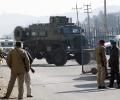
'India has already suffered in the raid of January 2, and taken punishment. If comparable or higher retribution does not visit Pakistan, there is no reason why it should not undertake such a misadventure again,' says Lieutenant General Ashok Joshi (retd).
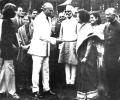
'Indira Gandhi, it appears, did not to consult her Cabinet colleagues, or diplomats, or civil servants when she decided to sign the agreement in Shimla.' 'We ruefully recall Bhutto's perfidy and the Indian prime minister's gullibility,' says Lieutenant General Ashok Joshi (retd).

'How can Kashmir be demilitarised if the terrorist threat remains and Pakistan continues to incite elements in Kashmir to keep the internal situation unstable?' asks former foreign secretary Kanwal Sibal.
.jpg)
The Indian Army must be given a free hand to retaliate punitively at one or more places of its choosing on the LoC. The aim should be to cause maximum damage to the forward posts of the Pakistan army, particularly those through which recent attacks have been launched, thereby raising the cost for the army, says Gurmeet Kanwal.

'What of Modi? They are willing to take their chances. Maharashtra's Muslims recall how the Congress scared them with the Bal Thackeray bogey for decades, yet, when it came to using all the might of the State to protect them from Shiv Sena goons, be it in 1970, 1984 or 1992-1993, it did nothing. For them, the Congress's secularism is a cruel joke.' 'This argument that we ('seculars') must vote for the 'winning secular candidate' has one more implication: Those who are against Hindutva must forever be stuck with the same corrupt, cynical and tired old parties, who are not even secular,' says Jyoti Punwani.

The developments in Af-Pak region, particularly the fall out of Pak political paralysis, would make President Xi Jinping's task a little more complicated, says Colonel R Hariharan.
 © 2026 Rediff.com - Advertise with us - Disclaimer - Privacy Policy - Sitemap - Feedback - About us - Terms of use - Grievances